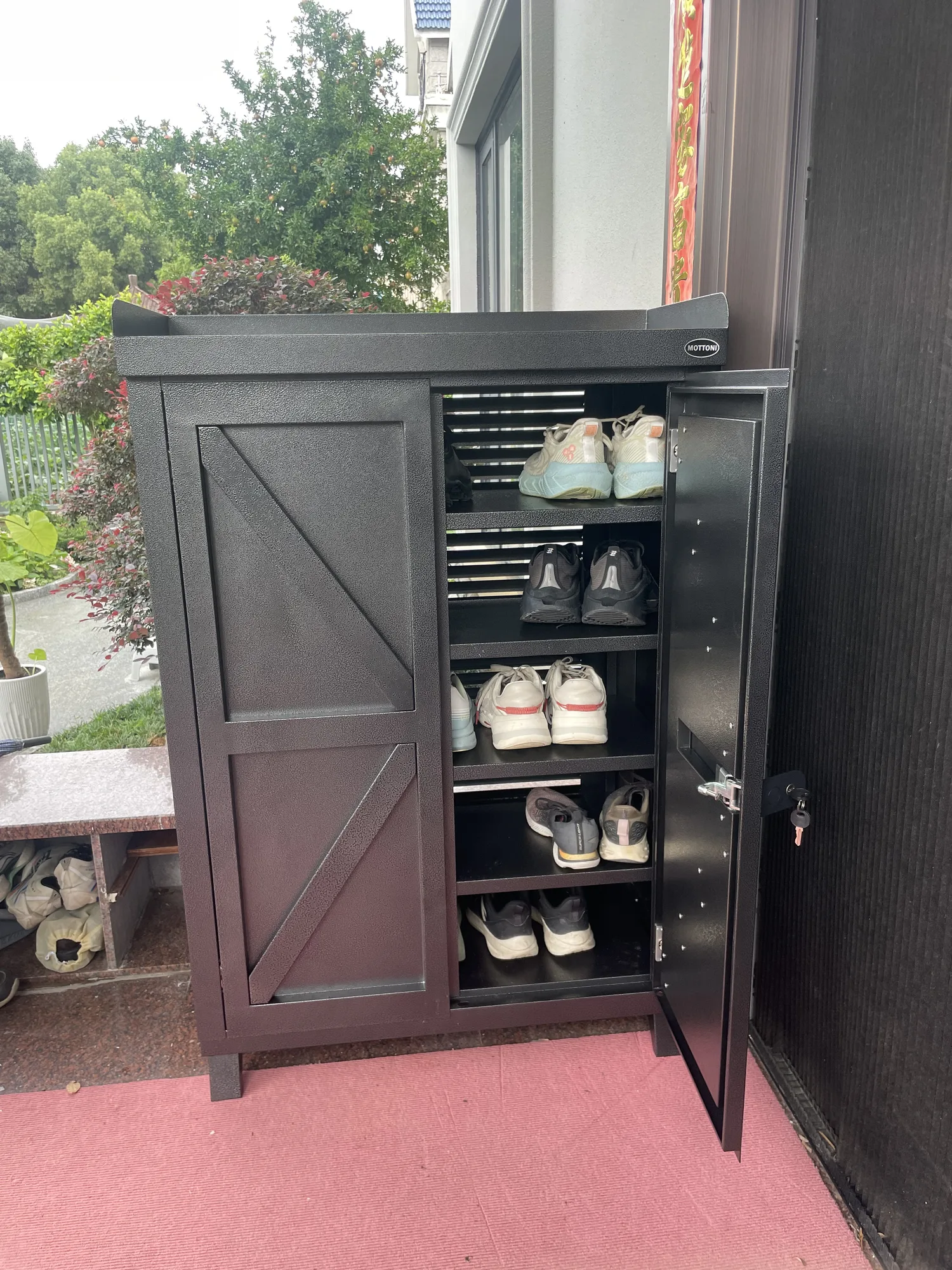
An entrance shoe cabinet has one of the hardest jobs in the house. It holds shoes that are wet from rain, warm from a run, or muddy from the garden, and it does so in a small, enclosed space next to the front door. When that space cannot breathe, the result is predictable: condensation on the panels, a damp smell every time the door opens, and eventually mould in the joints.
Our domestic range was developed around that problem. The answer is not a stronger air freshener or a bigger dehumidifier sachet — it is a cabinet that lets moisture leave as quickly as it arrives.
Where the smell actually comes from
Shoes bring in sweat and soil, and both stay wet inside a closed box. In a conventional cabinet with a tight door, the moisture has nowhere to go. Relative humidity inside the cabinet climbs, bacteria multiply faster, and the smell becomes a permanent feature of the entrance rather than a temporary one. Industry surveys in the home-furniture sector have reported that a majority of households with a closed entrance cabinet experience some degree of odour or mould during humid months.
The material matters too. Cabinets built from standard particleboard or MDF absorb moisture at the cut edges, swell, and give mould a surface to grow on. A cabinet that is described as “outdoor” or “waterproof” but uses the same board as an indoor unit will fail in exactly the same way.
What louvred doors do
A louvred door is a controlled opening. The angled slats create a continuous path for air to move in and out while still blocking direct rain and keeping the contents out of sight. In practice this produces two effects:
- Air exchange. Warm, humid air rises out of the top of the cabinet and cooler air enters lower down, so the moisture from a pair of damp shoes leaves the cabinet instead of condensing on the shelves.
- Faster drying. With continuous airflow, the internal humidity of a louvred cabinet runs measurably lower than a sealed one — installers in our domestic projects typically report a 30–40% reduction in damp readings on the same site.
That airflow also reduces the standing water that bacteria need. The point is not to make the cabinet sterile; it is to remove the conditions where odour becomes permanent.
Waterproofing has to match the ventilation
Ventilation alone is not enough if the cabinet itself absorbs water. The specification we use for outdoor shoe storage combines three things:
- A waterproof board core with sealed edges, so splash and condensation do not swell the panels.
- Rust-proof hinges and fixings, because the dampest part of any cabinet is the door edge and the bottom rail.
- An aluminium louvre frame where the door is fully exposed to weather, which keeps the slats straight and avoids the rust streaks that steel louvres develop in coastal air.
The combination is what allows the cabinet to sit on a covered balcony, in a carport or beside an entrance that catches wind-driven rain, without the “outdoor” label becoming a technicality.
Specifying louvres for a real climate
Louvre design is a balance. Slats that are too wide let rain in and expose the contents; slats that are too tight reduce airflow to the point where the door might as well be solid. Three practical points for buyers and specifiers:
- Keep the gap consistent and the slats angled downward, so water runs off the face rather than into the cabinet.
- Make the slats removable for cleaning. A louvred door collects dust on the leading edge, and a panel that cannot be cleaned quickly becomes a maintenance complaint.
- Combine ventilation with adjustable shelving, so tall boots and low trainers can each have the space they need without blocking the airflow path.
How we build it
Our outdoor shoe storage cabinet uses a waterproof board core, louvred doors with an aluminium frame, rust-proof hinges and adjustable shelves. The cabinet is flat-packed for export and assembles with a screwdriver. For distributors, the louvred door is also a useful visual differentiator on the shop floor: it communicates ventilation before the customer reads a single line on the label.
The lesson from our domestic installations is simple. An entrance cabinet is not a sealed box for storing shoes; it is a small drying room. Once it is designed that way, the smell problem largely solves itself.