Home / Manufacturing Capabilities
Manufacturing capability 06
Metal Product Assembly
Hardware fitting, product assembly and flat-pack kitting for cabinets, enclosures and custom metal products ready for their next destination.
What metal product assembly does
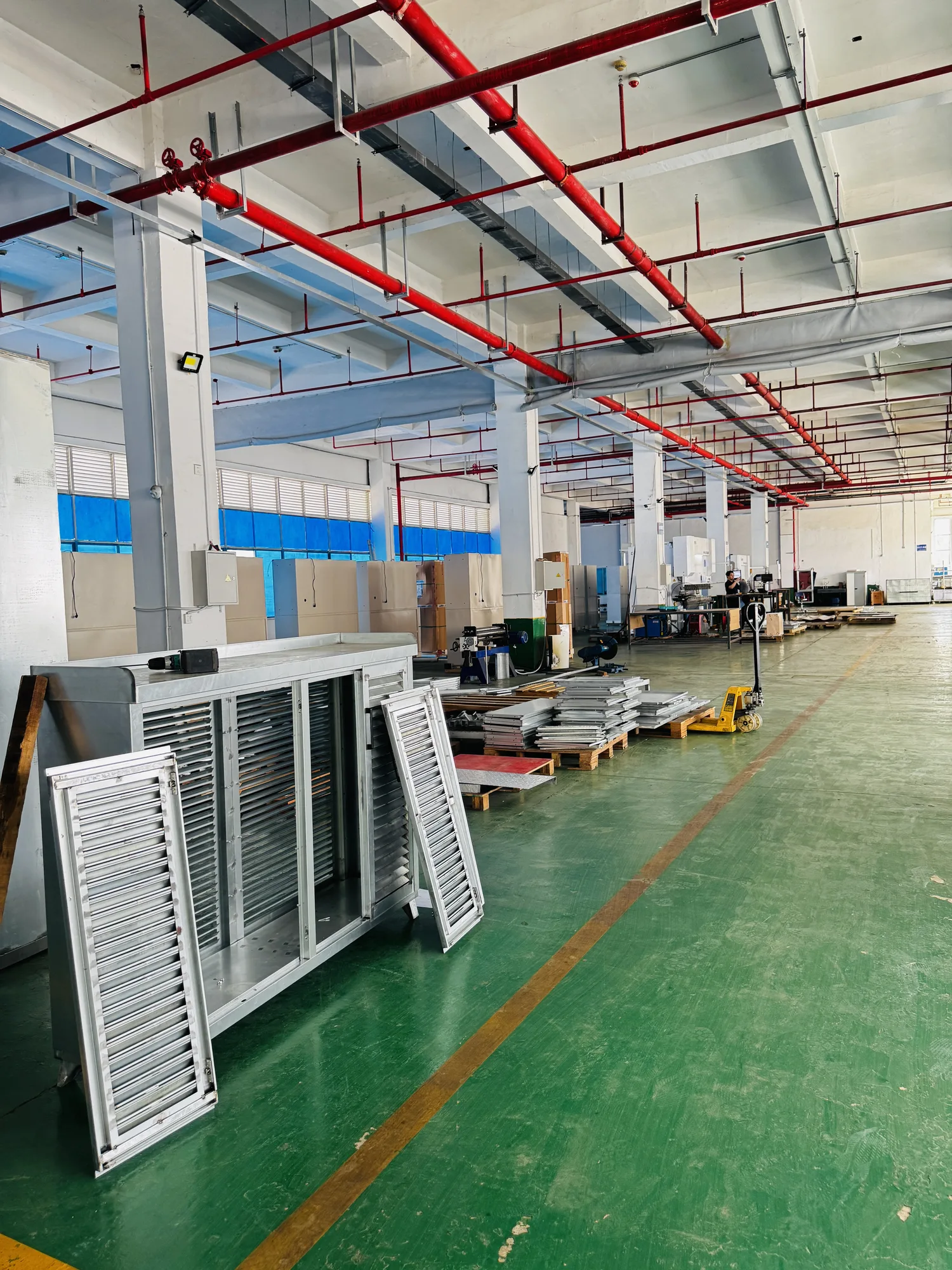
Assembly combines fabricated parts and purchased components into the agreed delivery condition.
Depending on the product, assembly can include hinges, locks, shelves, drawers, feet, castors, gaskets, vents, labels, fasteners and accessory packs. The output may be a fully assembled unit, a subassembly or a labelled flat-pack kit.
The approved drawing, bill of materials and packing specification determine what is fitted, what is supplied loose and what must be checked before cartons are closed.
Its role in metal manufacturing
Assembly is where individual components become a usable product.
Door alignment, drawer travel, lock engagement, gasket compression and shelf fit all depend on earlier fabrication accuracy and correct hardware installation. Assembly checks can reveal an interface problem that individual part inspection would miss.
For flat-pack products, the same stage verifies that panels, fasteners, instructions and accessories form a complete installation kit. Clear identification reduces handling errors in the customer’s warehouse or at the installation site.
Relevant applications
- Cabinet doors, hinges, handles, locks and three-point mechanisms
- Adjustable shelves, drawer runners, rails and internal dividers
- Enclosure mounting plates, cable glands, vents and service panels
- Gaskets, feet, castors, wall brackets and levelling hardware
- Labels, rating plates supplied by the customer and brand identification
- Flat-pack fasteners, instructions and accessory kitting
Important technical considerations
- Approved bill of materials, component revision and approved equivalents
- Fastener type, tightening requirement and thread protection
- Door and drawer alignment, operating clearance and locking function
- Gasket orientation, joint position and compression
- Cosmetic-face protection during assembly and handling
- Customer-supplied parts, labels and country-specific documentation
- Assembly sequence, tool access and final functional checks
- Carton contents, kit completeness and packing orientation
Materials, components and delivery formats
Metal assemblies can combine steel, stainless, aluminium, plastics, rubber and purchased hardware. Component compatibility is reviewed against the environment and intended use, particularly where dissimilar metals or outdoor exposure are involved.
| Fully assembled | Hardware fitted and agreed function checks completed before packing |
|---|---|
| Partial assembly | Major subassemblies completed; remaining parts packed and identified |
| Flat-pack kit | Labelled panels, fasteners, instructions and accessories checked as a set |
| Customer components | Fitted only to an approved parts list and incoming-condition agreement |
| Functional testing | Defined by product; electrical or specialist testing separately agreed |
Manufacturing limitations
Assembly cannot compensate for an undefined hardware specification or incompatible purchased part. A supplier change can affect fit even when the catalogue description appears similar, so substitutions require approval.
Mechanical assembly does not establish electrical safety, ingress protection or other certified product performance. Where wiring, powered components or specialist functional tests are required, their exact scope must be agreed before quotation.
Related products and capabilities
Assembly is used for garage storage cabinets, patio storage cabinets, custom cabinets and custom enclosures.
Component and packing requirements originate in drawing review. Finished surfaces arrive from surface finishing, and completed units move to final quality control.
Metal product assembly — common questions
Can you fit customer-supplied locks or hardware?
Yes, subject to an approved parts list and confirmation of fit and incoming condition. Send samples or full specifications before the production design is frozen.
Can products be supplied fully assembled or flat-pack?
Both delivery formats can be reviewed. Product geometry, shipping volume, installation capability and packing cost determine which is more suitable.
Can you include branded instructions and accessory packs?
Yes. Manual language, carton printing, labels and accessory contents are defined in the product and packing specification for OEM programmes.
Do you test electrical or powered assemblies?
Only where the exact test scope, equipment, acceptance criteria and responsibility are agreed. Ordinary mechanical assembly does not imply electrical certification or specialist testing.
Define your assembly requirement
Send the bill of materials, hardware specification and delivery format. We review fit, assembly checks and kit completeness before quoting.