Category: Buying Guides

Specification checklists and sourcing questions for buyers of outdoor metal storage.

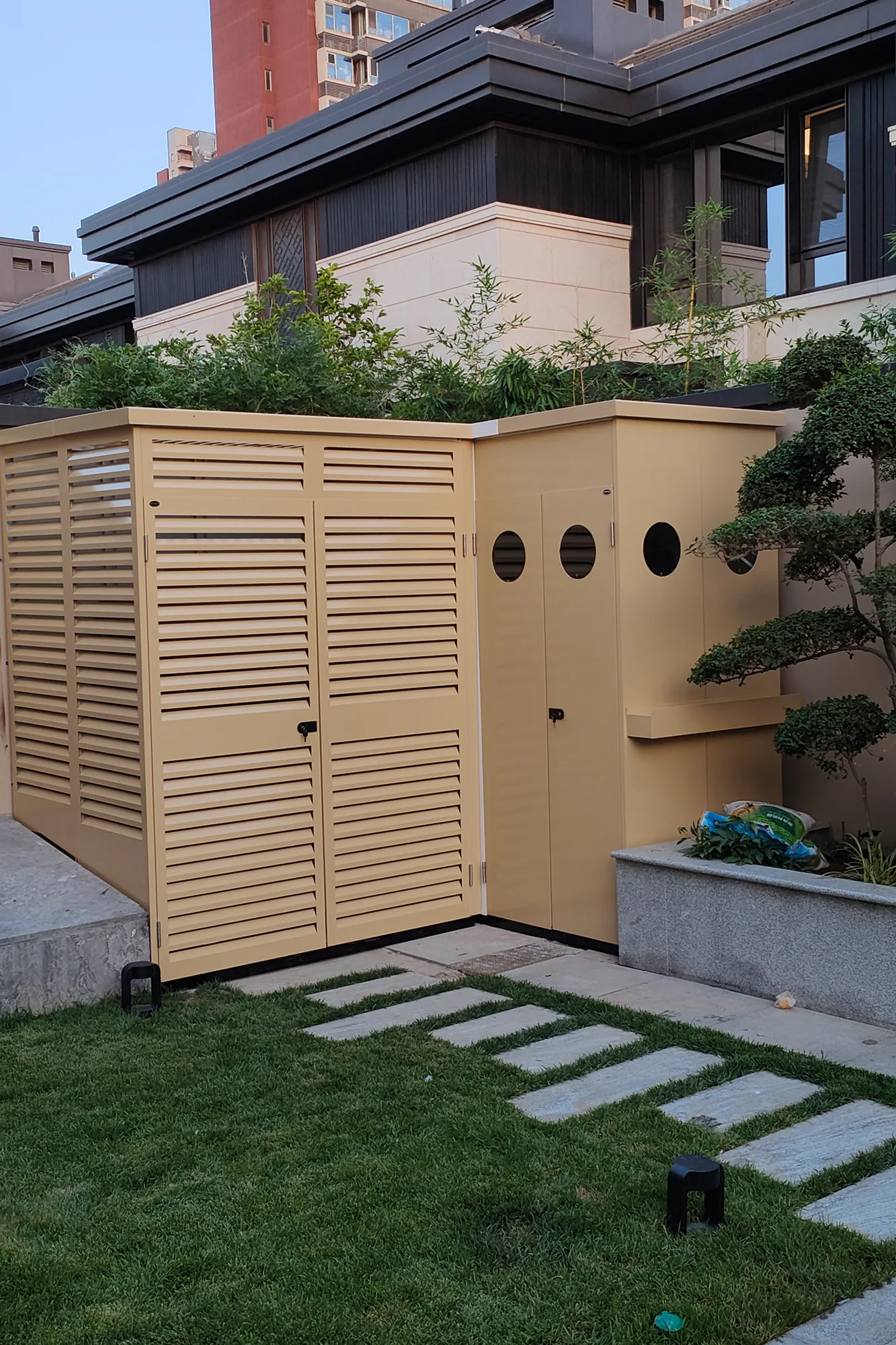
  • Pool Equipment Enclosures: Ventilation, Access and Noise Control

    Pool Equipment Enclosures: Ventilation, Access and Noise Control

    A pool equipment enclosure has to solve a conflict. The pump and heater need airflow to stay cool, the owner wants the equipment out of sight, and the neighbours want the noise reduced. A box that looks neat but suffocates the pump will shorten its life and void the warranty; a box with generous vents but no service access turns a five-minute filter clean into a dismantling job.

    Why airflow is the first specification

    Most pool pumps are air-cooled. They draw cool air across the motor and expel warm air, and they are rated for a maximum ambient temperature — typically 40–50 °C. An enclosure that traps heat raises the ambient around the motor and pushes it toward that limit on exactly the days when the pump runs longest.

    Two rules of thumb help at the design stage:

    • Free area, not hole count. Vent area should be calculated after allowing for mesh, louvers and insect screen. A louvered panel with 40% free area needs more than twice the opening of a plain cut-out.
    • Cross-flow, low in and high out. Cool air should enter near the bottom of one side and warm air should leave near the top of the opposite side. Vents on a single face circulate very little.

    If the enclosure also houses a gas heater, the heater manufacturer’s clearance and venting instructions override any general rule. Confirm the model before finalising the panel layout.

    Service access

    Design for the maintenance task, not just the installation. A pump basket needs to be lifted out, a filter lid needs to be turned, and a heater needs to be isolated. In practice this means:

    • Double doors, or a full-height hinged panel, on the service side.
    • At least 600 mm of clear working space in front of the pump and filter.
    • A removable roof section or a roof that lifts, if the filter is tall.
    • Pipe penetrations sized with a grommet or sleeve, so the enclosure can be removed without cutting plumbing.

    A useful test is to walk through a filter clean in your head: where do you kneel, where does the basket go, and what do you have to remove first? If the answer involves a screwdriver, the access is wrong.

    Noise: what a metal box can and cannot do

    A single-skin steel panel reflects sound but does not absorb it, and it resonates. An enclosure will typically reduce perceived noise by 5–15 dB(A) depending on construction, which is audible but not transformative. To improve on that:

    • Line the inside with a moisture-resistant acoustic foam or a mineral-wool panel faced with perforated steel.
    • Use a solid roof with a sealed joint rather than an open louvered top.
    • Keep the pump off the enclosure floor with a rubber isolation pad.
    • Direct the exhaust vent away from the seating area and from the neighbour’s boundary.

    Be honest with the end customer about the achievable reduction. Promising “silent” and delivering “quieter” is how a good product earns a bad review.

    Corrosion in a chlorine environment

    Pool equipment sits in one of the harshest domestic environments: chlorine vapour, splashes, humidity and, in coastal areas, salt. Specify hot-dip galvanised steel with a 70–80 µm polyester powder coat, stainless fixings, and a zinc-rich touch-up pen for site cuts. Avoid untreated aluminium hinges and plain zinc-plated screws, which are the first parts to fail.

    If the enclosure is within the splash zone, consider a stainless-steel or aluminium frame with composite infill panels. It costs more, but it removes the maintenance cycle entirely.

    Base, drainage and security

    The enclosure should sit on a level concrete pad, not on soil or grass. Rain running off the roof needs somewhere to go that is not the pump bay, so a 20–30 mm upstand or a drained channel at the base is helpful. If the equipment is valuable, specify a lockable handle and hinges with non-removable pins.

    Information to send with an enquiry

    To quote accurately, a factory needs the pump and heater models, the overall footprint and height available, the service side, the required vent orientation, the colour, and whether noise reduction is a priority. Send those and you will get a proposal that fits the first time; send a photo and a rough size and you will get a box that fits the photo.
  • How to Specify a Metal Garden Shed for Resale: A Buyer’s Checklist

    How to Specify a Metal Garden Shed for Resale: A Buyer’s Checklist

    Buying garden sheds for resale looks straightforward until the first container arrives. A shed that photographs well can still fail in the market because the door binds after a season, the carton is too heavy for a two-person home delivery, or the assembly manual assumes tools the customer does not own. This checklist covers the decisions that matter before you place a purchase order.

    1. Start with the retail price point, not the product

    A garden shed programme is built backwards from the shelf price your market will accept. That price determines the steel gauge, the coating system, the packaging and the accessories you can afford. Deciding the product first and forcing the price later is how programmes end up with a shed that is too expensive for its category or too thin for its promise.

    Write down three numbers before you talk to a factory: target retail price, target gross margin, and the landed cost you can support. Every specification choice below should be tested against those numbers.

    2. Size and internal clearance

    Nominal sizes are marketing; internal dimensions are what the customer measures. Confirm:

    • External footprint and internal floor area, in both metric and imperial if your market uses both.
    • Internal height at the wall and at the ridge — a nominal 6 ft shed often has 1.7 m at the eaves.
    • Door opening width and height, measured with the door open at 90 degrees.
    • Whether the roof overhangs the door enough to keep rain off the threshold.

    Ask for a dimensioned drawing, not a photograph. If the supplier cannot provide one, the specification is not ready for a private-label programme.

    3. Steel gauge and frame construction

    Panel thickness is usually quoted between 0.6 mm and 1.2 mm. Thinner panels are not automatically bad — a well-braced 0.8 mm panel can outperform a poorly braced 1.0 mm one — but the gauge must match the promise. A shed sold as “heavy duty” should not use 0.6 mm sheet.

    Look at how the structure resists racking: corner posts, base rails, roof beams and the number of fasteners per panel. Ask whether the frame is screwed or riveted, and whether the fasteners are stainless or zinc-plated. On a coastal site, that single detail can decide whether the shed is serviceable in year five.

    4. Door type and hardware

    The door is the part that fails first. Decide between sliding, hinged single, hinged double and roll-up, then check:

    • Does the door run on a track that can be cleared of leaves and grit?
    • Is there a channel or threshold that traps water?
    • Are hinges adjustable, and are they accessible after assembly?
    • Is the latch lockable, and does it accept a padlock your market actually stocks?

    For retail, a lockable handle is often worth more than an extra 0.1 mm of steel, because it is visible on the shelf and easy to explain.

    5. Finish and colour range

    Confirm the substrate (hot-dip galvanised, electro-galvanised or zinc-rich primer), the powder film thickness and the colour system. If you plan a colour range, ask for the minimum quantity per colour — powder changeovers cost money, and a four-colour programme may carry a different MOQ from a single-colour one.

    Also ask for a physical colour sample or a certified RAL match. Screen colours are not an approval standard.

    6. Packaging and home delivery

    A shed is a bulky, heavy parcel. Packaging decisions affect damage rates, carrier surcharges and customer reviews:

    • Carton dimensions and weight per box, and how many boxes per unit.
    • Corner protection and edge boards — the most common transit damage is a crushed corner.
    • Whether the carton can be handled by two people or needs a pallet truck.
    • Whether fixings and the manual are packed in a labelled bag inside the correct carton.

    Ask for a carton drop-test report if the product will move through parcel networks rather than pallet freight.

    7. Documentation and compliance

    Depending on the market, you may need a declaration of conformity, a technical file, REACH or RoHS statements, FSC paperwork for any timber components, and a manual in the local language. These are not optional extras; they are the difference between a container that clears customs and one that sits in a warehouse.

    8. Sample approval before production

    Approve a pre-production sample against a written checklist: dimensions, gauge, colour, hardware, packaging and manual. Photograph the approved sample from every angle and keep it as the reference for the QC inspection. Verbal approval is not a specification.

    The questions worth asking

    If you take one thing from this checklist, make it the dimensioned drawing plus the gauge and finish written into the purchase order. Everything else can be negotiated; those three items decide what the customer actually receives. Our team is happy to review a draft specification before you send it to tender — most programmes improve simply by making the drawing and the finish system explicit.