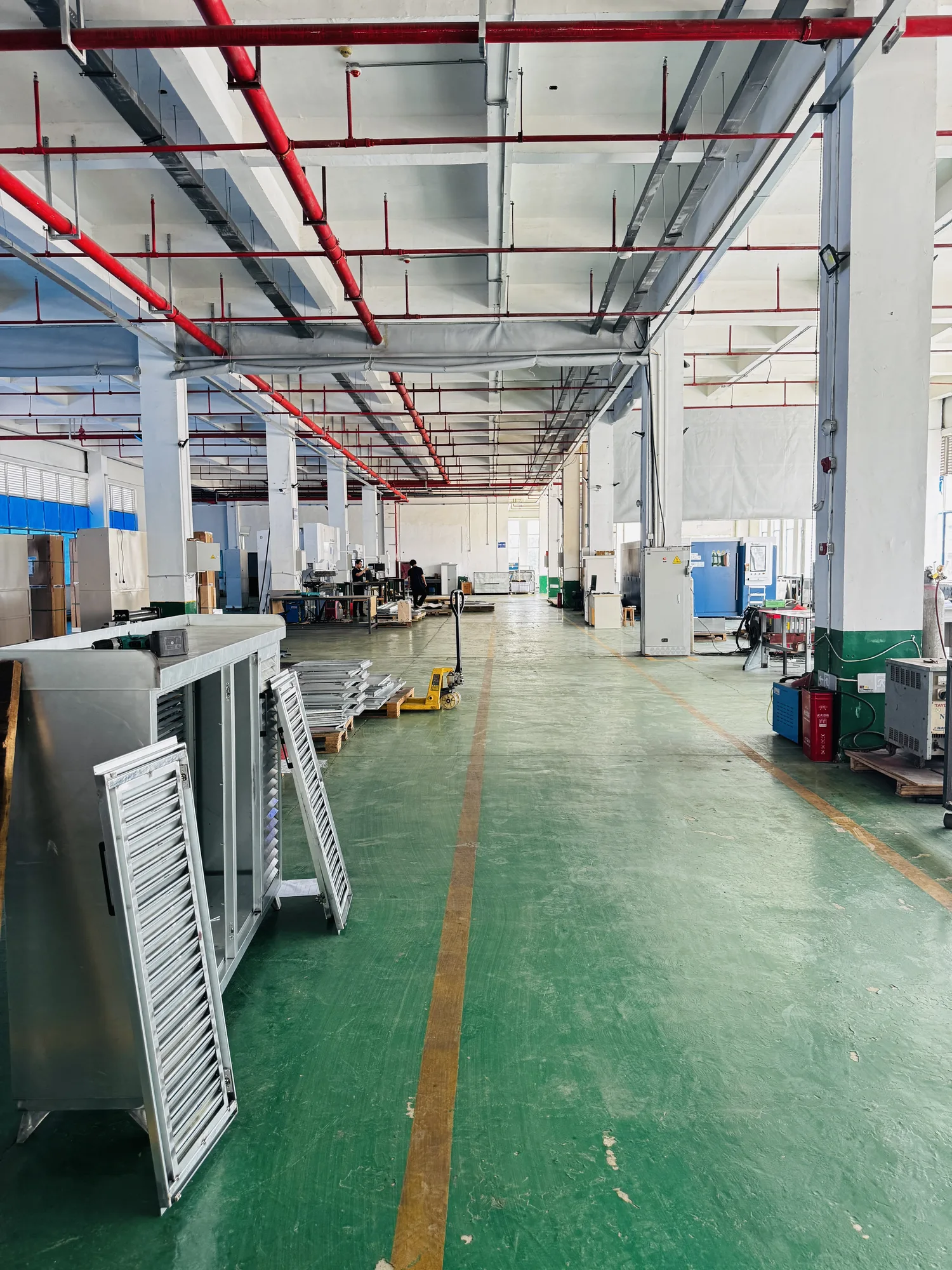
Almost every enquiry we receive for outdoor metal storage mentions the finish. Buyers want to know that the cabinet, shed or enclosure will still look presentable after three or four seasons in the rain. The answer is rarely a single word such as “galvanised” or “powder-coated” — those are two different technologies doing two different jobs, and the specification only becomes meaningful when you know which job each one performs.
Two layers, two jobs
Galvanising protects the steel. A zinc layer sits on the surface and corrodes sacrificially: when the coating is scratched, the zinc around the scratch gives up electrons before the steel does. This is why galvanised steel can tolerate cut edges, drilled holes and minor installation damage without rusting immediately.
Powder coating protects the galvanising and defines the product. A cured polyester film provides the colour, the texture and the UV resistance. It is a barrier coating: once water reaches the steel through a crack, the coating cannot stop corrosion the way zinc can. A powder-coated part with a poor substrate is therefore more vulnerable than it looks.
The combination — zinc beneath, powder on top — is the system used for outdoor furniture, garden buildings and utility enclosures that are expected to last a decade or more.
What “galvanised” actually means in a quotation
The word is used loosely in export quotations. Ask which of these three you are being offered:
- Hot-dip galvanised steel sheet: a zinc layer typically 60–120 g/m² total. The most robust option for outdoor structures and the standard choice for garden sheds and storage cabinets.
- Electro-galvanised sheet: a much thinner zinc layer, usually 10–30 g/m². Adequate for indoor cabinets and short-life products, not for exposed outdoor use.
- Zinc-rich primer: a paint containing zinc dust, applied before the topcoat. It offers some sacrificial protection but is not a substitute for hot-dip material when the part will be permanently outdoors.
A quotation that says only “galvanised steel” tells you nothing about which of these you are buying. Ask for the zinc weight per square metre and the sheet thickness, and put both in the purchase order.
What powder coating adds — and what it cannot do
Powder coating gives you RAL colour control, a consistent gloss level and a film that resists chalking for years. For a retail brand, that is not cosmetic detail; it is the product. A garden shed in RAL 7016 with a matte texture reads as a different product from the same shed in a glossy green.
Three variables determine whether the coating survives outdoors:
- Pre-treatment. Degreasing and a conversion coating (zinc phosphate or a zirconium-based process) are what make the powder adhere. Skipping or shortening this step is the most common cause of peeling and blistering in the field.
- Film thickness. For exterior steel, 60–80 µm is the working range. Below 50 µm, UV and abrasion resistance drop quickly; above 100 µm, the film becomes brittle and cracks at folded edges.
- Powder chemistry. Polyester powders are the standard for outdoor use. Epoxy powders are harder and more chemical-resistant but chalk badly in sunlight, which is why they belong on indoor parts.
Reading salt-spray test data
Suppliers often quote ASTM B117 hours as if they were a service life. They are not. A 500-hour salt-spray result does not mean five years outdoors, and a 1,000-hour result does not mean ten. The test is a comparative tool run under constant salt fog — far harsher than most real environments and with no UV, no wet-dry cycling and no temperature variation.
What the number is useful for is comparing two candidate systems from the same supplier, tested in the same laboratory. If one finish reaches 720 hours without red rust and another fails at 240, the difference is real. If two suppliers quote 500 and 1,000 hours but one is testing a scribed panel and the other an unscribed panel, the numbers are not comparable at all. Ask for the test report, not the headline figure.
Matching the finish to the market
Climate and use matter more than brochure language:
- Coastal and marine markets. Specify hot-dip galvanised substrate plus a 70–80 µm polyester powder coat, stainless fixings and a zinc-rich touch-up pen in the carton. Salt air attacks every cut edge and fastener.
- Wet, temperate markets. Galvanised substrate with 60 µm powder is generally sufficient, provided the base is drained and the panels do not sit in standing water.
- Hot, dry, high-UV markets. UV stability and colour fastness dominate. Ask for a polyester powder with a documented colour-retention result rather than the cheapest RAL match.
How we specify it at Motton
Our standard exterior build is hot-dip galvanised steel sheet, alkaline degreasing, a zirconium conversion coating, and 60–80 µm of polyester powder in the customer’s RAL colour. Edges are folded rather than left as exposed cuts wherever the design allows, and fixings are stainless or zinc-flake coated. For coastal programmes we increase film thickness and add a touch-up pen to every carton.
If you are comparing quotations from several factories, send us the current specification and we will tell you which lines are doing real work and which are marketing. That comparison is usually the fastest way to see where a cheaper offer has removed cost.